

1. The Mechanical Challenge of High-Loft Natural Fibers
Material ScienceCashmere and wool are highly prized for their thermal regulation and plush feel, but their high-loft nature presents a massive challenge for standard quilting lines. Manual operators often struggle to maintain consistent pressure, leading to crushed fibers, uneven panels, and excessive material waste. This manual inefficiency drives up labor costs and chokes production speed. By implementing automated machinery designed for thick layers, factories can instantly process up to 80mm of loft without human intervention, boosting throughput from a few units an hour to high-speed, continuous output, directly inflating profit margins.
Production Efficiency
- Core Insight: Manual handling of thick, compressible fibers causes inconsistent panel quality and severe production delays.
- Technical Solution: Infinity's automated quilting machines handle up to 80mm thicknesses with precision, replacing multiple manual operators and guaranteeing high-speed, uniform production.
2. Stitch Length Calibration for Material Integrity
Machine CalibrationChoosing the correct stitch length is critical when quilting wool and cashmere. A stitch that is too short will compress the loft and destroy the luxurious feel, while a stitch that is too long allows the natural fibers to shift and clump over time. Relying on manual machine adjustments to find the perfect 2-8mm balance wastes valuable production time. Modern computerized systems allow for instantaneous, digital stitch length calibration. This eliminates the trial-and-error phase, reduces the need for specialized technicians on the floor, and ensures that every mattress panel meets exact luxury specifications at maximum speed.
Machine Calibration
- Core Insight: Incorrect stitch lengths on high-loft materials lead to irreversible product damage and costly material waste.
- Technical Solution: Utilizing digital servo-controlled interfaces allows operators to instantly set perfect 2-8mm stitch lengths, ensuring zero material waste and maximizing machine uptime.
3. Automating Presser Foot Adjustments
Process OptimizationVariable material thickness across different mattress models traditionally required operators to physically stop the line and manually adjust the presser foot height. This archaic process requires excess labor and drastically reduces beds-per-hour metrics. High-end automated quilting machines feature dynamic presser foot adjustments that automatically adapt to the specific thickness of the cashmere or wool layer. This seamless transition prevents the fibers from being dragged or torn, ensuring flawless 360-degree jump-stitch patterns while allowing a single operator to oversee multiple continuous machines.
Cost Control
- Core Insight: Stopping production lines for manual mechanical adjustments destroys daily yield targets and inflates labor overhead.
- Technical Solution: Automatic presser foot adjustment technology adapts to varying lofts on the fly, keeping the line moving continuously and drastically reducing the required labor headcount per shift.
Essential Machinery for Scaling Production

High-efficiency single-needle machine with a German DURKOPP head. Automatically adjusts to material thickness, eliminating manual labor and speeding up complex 360° pattern production.
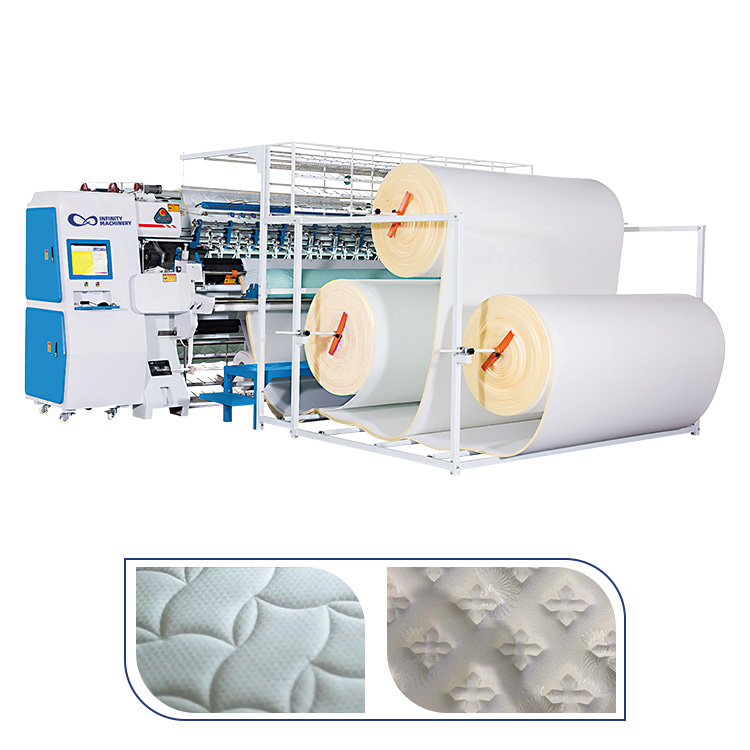
Servo-driven multi-needle machine capable of high-volume quilting. Features advanced infrared thread break detection for uninterrupted, high-yield manufacturing.
4. Thread Tension and Breakage Prevention
TroubleshootingThick layers of wool and cashmere create immense friction on sewing needles, frequently causing thread breakage in outdated machines. Every thread break requires a manual operator to halt the machine, rethread the needle, and realign the pattern, bleeding away profit margins minute by minute. Advanced computerized quilting machines utilize sophisticated infrared thread break detection and automated tensioning systems. By automatically stopping precisely when an issue is detected and maintaining optimal tension through thick layers, these machines prevent ruined panels and allow factories to operate with minimal human supervision.
Material Science
- Core Insight: High-loft natural fibers generate excess needle friction, causing frequent thread breaks that require costly manual intervention.
- Technical Solution: Infrared detection and automatic tensioning systems eliminate the need for constant manual monitoring, drastically reducing downtime and preventing expensive material scrap.
5. Synchronizing Feed Rates to Eliminate Puckering
Production EfficiencyWhen quilting heavy cashmere or wool layers, the top fabric and the bottom backing often feed at slightly different rates, causing unsightly puckering and panel distortion. In the past, skilled laborers had to manually guide and stretch the fabric to compensate, a slow and ergonomically damaging process. Today, integrating a full CNC Mattress Panel Production Line utilizes full servo control across all axes. This guarantees that the saddle, rollers, and needles are perfectly synchronized, delivering flat, perfectly tensioned panels at high speeds without manual pulling or alignment.
Machine Calibration
- Core Insight: Asynchronous feeding of thick layers results in panel distortion, leading to rejected products and wasted luxury materials.
- Technical Solution: Full servo-system synchronization ensures perfect alignment of all material layers automatically, tripling output speeds while completely removing human error from the feeding process.
6. Scaling High-End Production: From Manual Bottlenecks to Automated Output
Labor OptimizationThe ultimate goal for any mattress manufacturer is to scale the production of high-margin luxury beds without scaling labor costs linearly. Relying on manual operators to manage thick wool and cashmere layers creates an unbreakable ceiling on daily output and profitability. Transitioning to heavy-duty, double-beam continuous quilting machinery fundamentally changes the factory's financial dynamics. By quilting two high-loft panels simultaneously with automated precision, factories can instantly double their output, slash their required labor force in half, and achieve unprecedented profit margins on their most premium product lines.
Cost Control
- Core Insight: Scaling luxury mattress production using manual labor destroys profit margins due to high wages and low output speeds.
- Technical Solution: Implementing double-beam, dual-control quilting systems allows a single operator to double the factory's yield, drastically lowering the cost-per-unit and maximizing ROI.
Optimize Your Line with Infinity Automation

Heavy-duty double-beam machine that quilts two panels simultaneously. Doubles your production output while drastically reducing the need for manual operators.

Features a self-contained border slitting device and full servo control. Maximizes material efficiency and automates complex patterns for high-loft luxury beds.
Investor Takeaway: The Automation Imperative
The true secret to overcoming the hurdles of processing high-loft luxury materials and maximizing profit margins is replacing outdated manual labor with automated, high-efficiency machinery. By upgrading to Infinity Mattress Machinery's computerized systems, factory owners can eliminate costly bottlenecks, reduce their dependency on skilled labor, and dramatically increase their daily production yield, ensuring a rapid and substantial return on investment.
Ready to Automate Your Mattress Production?
Contact Infinity Mattress Machinery today to design a high-efficiency, labor-saving production line tailored to your factory's exact needs.


