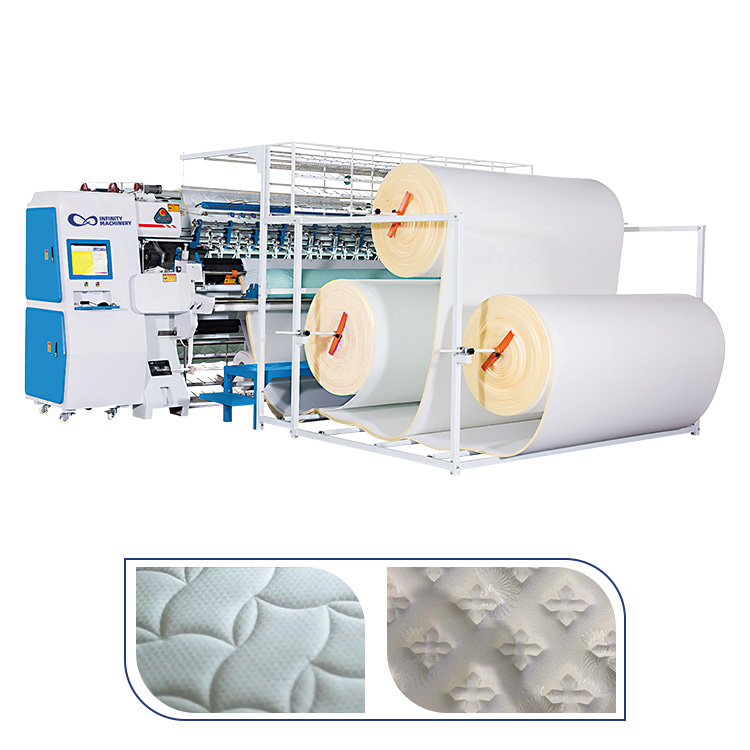
Multi-needle quilting machines are among the most complex and heavily used machines in a mattress factory. A typical machine runs 16-24 hours per day, sewing thousands of meters of quilted fabric each week. The combination of high-speed needle action, multiple thread paths, and continuous fabric feed means components wear faster than on almost any other mattress production machine.
This maintenance guide covers the key routines for multi-needle quilting machines — including models like the IF-Q-1200 Computerized Multi-Needle Quilting Machine and the IF-Q-1400 Multi-Needle Quilting Machine. We cover daily, weekly, monthly, quarterly, and annual maintenance tasks, plus a troubleshooting guide for the most common quilting problems.
A well-maintained quilting machine not only produces consistent, high-quality quilted fabric — it also lasts 10-15 years in production instead of 5-7. The time invested in maintenance pays for itself many times over through fewer breakdowns, less rework, and longer machine life.
Multi-needle quilting machines have several characteristics that make their maintenance more demanding than other mattress production equipment:
Daily tasks should be performed at the start of every shift. The multi-needle nature of quilting machines means daily checks take slightly longer than on single-needle machines.
| # | Task | Purpose |
|---|---|---|
| 1 | Clean the needle plate area — remove lint, thread debris, and fabric dust with compressed air or a soft brush | Prevents needle jams and thread breakage |
| 2 | Check thread tension on all active needles — look for loose or tight stitches | Ensures consistent pattern appearance |
| 3 | Inspect all active needles for burrs, bends, or dull points — replace as needed | Prevents fabric damage and skipped stitches |
| 4 | Verify the auto lubrication system is functioning and the oil reservoir is full | Prevents dry-run damage to high-speed components |
| 5 | Run a test pattern on scrap fabric — inspect for skipped stitches, broken threads, or pattern misalignment | Early detection of developing problems |
| 6 | Clear any thread waste from the thread stand and tension devices | Prevents thread snagging during production |
Weekly maintenance goes deeper into the mechanical components that experience gradual wear.
| # | Task | Purpose |
|---|---|---|
| 1 | Lubricate all accessible moving parts — needle bars, presser foot mechanism, thread take-up levers | Reduces friction wear on high-cycle components |
| 2 | Check the fabric feed mechanism — feed rollers, pressure rollers, and guide rails | Ensures straight, wrinkle-free fabric feeding |
| 3 | Inspect all thread guides and eyelets for grooves caused by thread wear — replace grooved guides | Prevents thread fraying and breakage |
| 4 | Clean the bobbin area and check bobbin winder function | Prevents bobbin-related thread issues |
| 5 | Check drive belt tension on the main motor and auxiliary drives | Prevents slipping and speed variation |
Monthly maintenance involves deeper inspection of components that wear over longer periods.
| # | Task | Purpose |
|---|---|---|
| 1 | Check needle timing on all active needle heads — adjust if stitch formation is inconsistent | Critical for pattern consistency |
| 2 | Inspect all electrical connections and control cable harnesses | Prevents intermittent electrical faults |
| 3 | Clean the servo motor cooling vents and blower fans with compressed air | Prevents motor overheating |
| 4 | Check pattern alignment by quilting a grid test pattern — measure squareness and repeatability | Ensures patterns match mattress dimensions |
| 5 | Inspect the fabric guiding system — rollers, spreaders, and edge alignment sensors | Prevents fabric drift during quilting |
Quarterly maintenance requires partial disassembly and should be performed by a trained technician.
| # | Task | Purpose |
|---|---|---|
| 1 | Full inspection of all needle bar bushings and bearings — check for play or roughness | Prevents needle bar misalignment |
| 2 | Check and tighten all frame mounting bolts and structural connections | Prevents vibration-related component wear |
| 3 | Inspect the pattern drive mechanism — belts, pulleys, and encoder sensors | Critical for pattern accuracy |
| 4 | Clean and inspect the take-up roller mechanism and fabric winder | Prevents fabric tension variations |
| 5 | Review the machine error log (on computerized models) for recurring fault codes | Identifies developing issues early |
Annual service is a comprehensive overhaul. Schedule it during a production break or slow period.
| # | Task | Purpose |
|---|---|---|
| 1 | Replace all high-cycle bearings — needle bar, main drive, feed mechanism | Restores smooth operation for another year |
| 2 | Full recalibration of all needle timing and looper/hook timing | Restores factory-fresh stitch quality |
| 3 | Replace all drive belts — even if they appear functional | Prevents unexpected belt failure mid-production |
| 4 | Deep clean the entire machine — remove all accumulated lint, dust, and oil residue | Prevents fire risk and improves cooling efficiency |
| 5 | Firmware update check and pattern software optimization (on computerized models) | Ensures latest features and pattern capabilities |
| 6 | Check motor brushes (on models with brush-type motors) and replace if worn | Prevents motor failure during production |
| Problem | Likely Cause | Quick Fix |
|---|---|---|
| Skipped stitches on multiple needles | Timing drift, low thread tension | Check overall timing, adjust master tension |
| Pattern misalignment | Encoder fault, belt slip, software drift | Recalibrate encoder, check belts, reboot controller |
| Fabric wrinkling during quilting | Uneven feed roller pressure, fabric tension issue | Adjust feed roller pressure, check fabric unwind tension |
| Frequent thread breakage | Burred thread guide, wrong needle size, incorrect tension | Inspect thread path, replace guides, adjust tension |
| Needle breaks during operation | Bent needle, timing issue, fabric jam | Replace needle, check timing, clear fabric obstruction |
| Pattern not matching mattress size | Incorrect pattern scaling, fabric feed calibration off | Verify pattern dimensions, recalibrate feed measurement |
| Machine makes unusual noise | Worn bearing, loose mounting bolt, lack of lubrication | Inspect bearings, tighten bolts, lubricate mechanism |
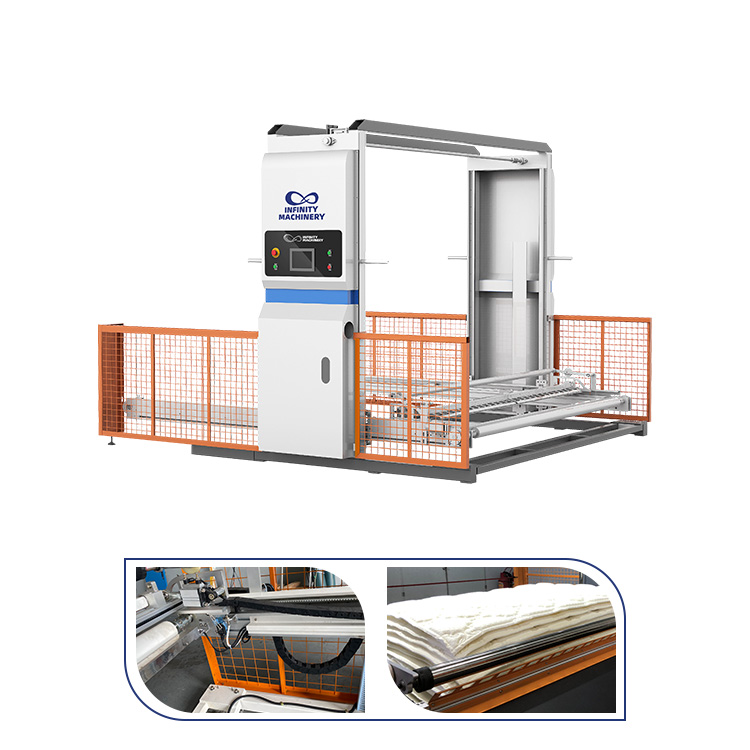
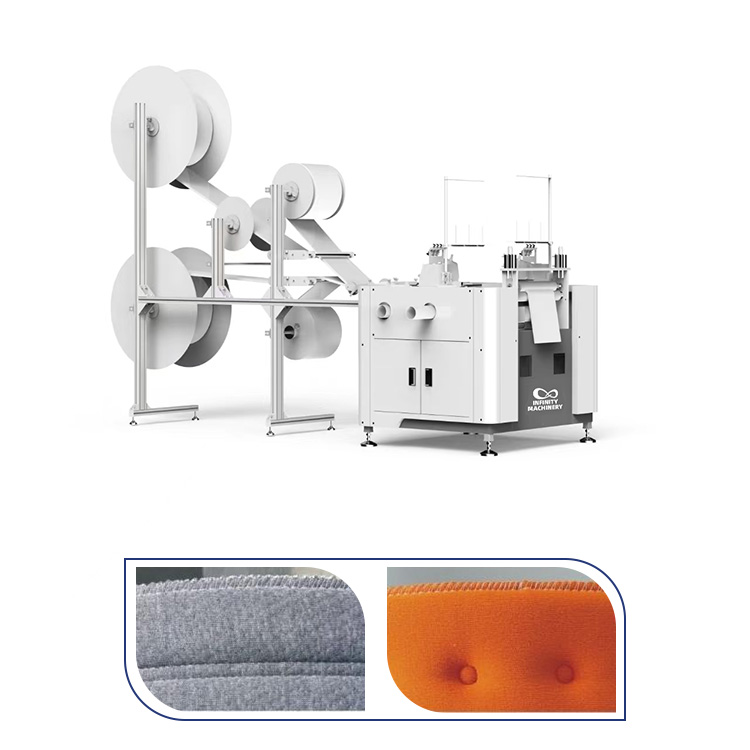
These three machines form a complete quilting department — from fabric quilting to finished panel stacking to mattress assembly.
Here is a practical maintenance schedule that any factory can implement:
Total annual maintenance time: approximately 80 hours per machine. Compare this to the cost of an unexpected breakdown — lost production time, rushed repair costs, and delayed shipments — and the investment is clearly worthwhile.
Our technical support team can help with remote diagnostics, maintenance planning, and spare parts for multi-needle quilting machines. Contact us for assistance.