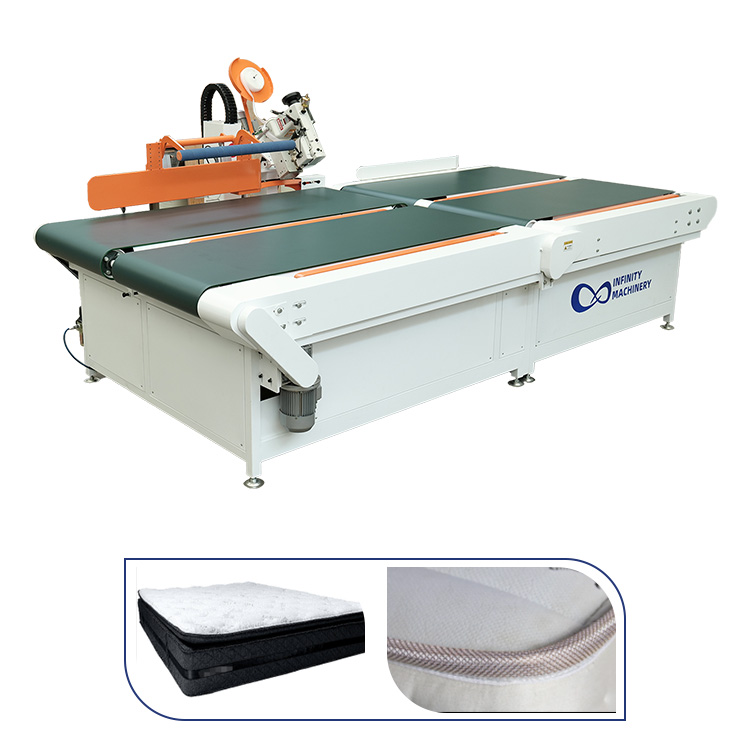
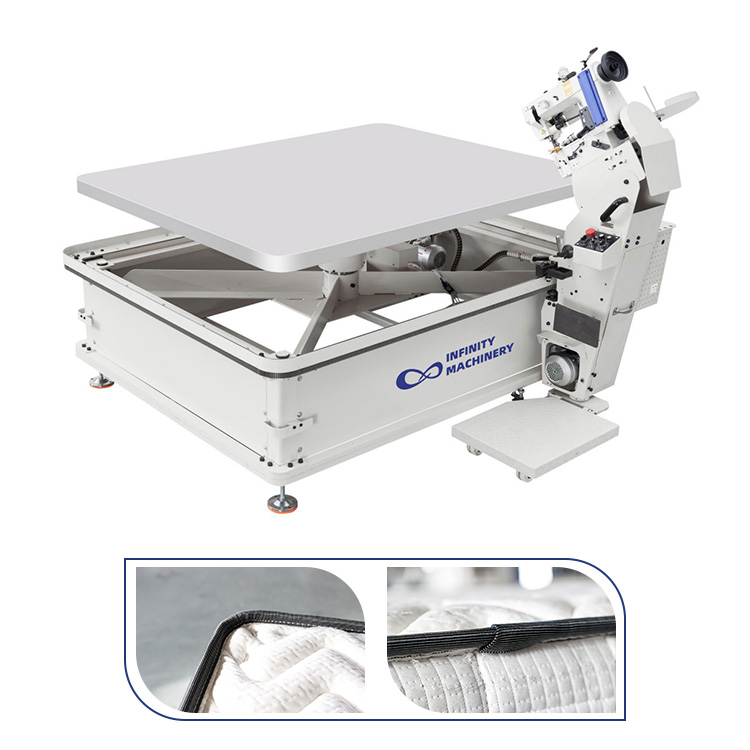
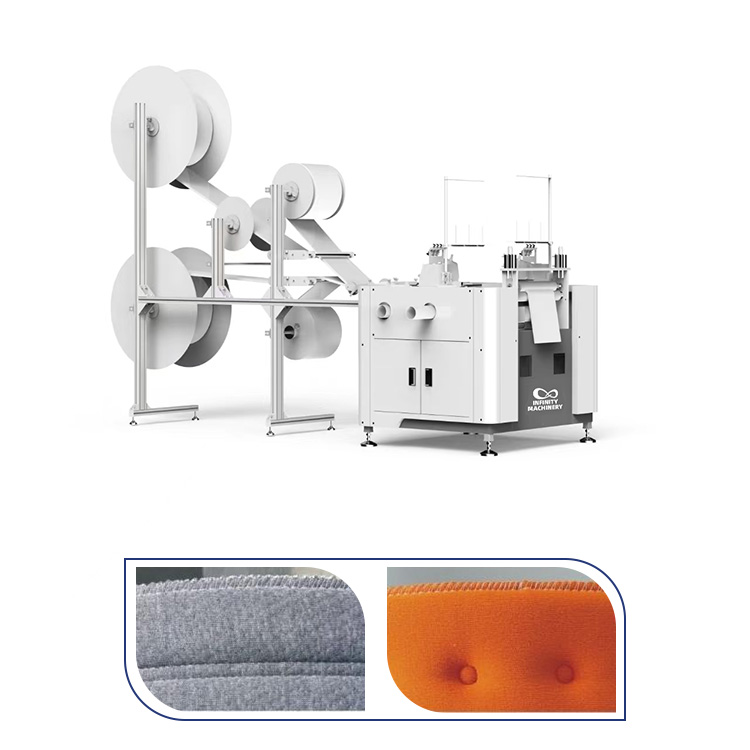
A tape edge machine is one of the most heavily used machines in any mattress finishing department. It runs continuously through every shift, sewing tape around hundreds of mattress perimeters each day. With that level of use, proper maintenance is not optional — it is essential for consistent quality and maximum machine life.
This guide covers complete maintenance for automatic tape edge machines — including the IF-T4 High-Speed Tape Edge Machine, the IF-T3T Chain Stitch Machine, and the IF-T2 Semi-Automatic Tape Edge Machine. Whether you own one of these machines or are evaluating a purchase, these maintenance routines will help you understand what it takes to keep a tape edge machine running at peak performance.
We have organized this guide by maintenance frequency — daily, weekly, monthly, quarterly, and annual — so you can build a complete maintenance schedule for your factory.
A tape edge machine operates under demanding conditions. It sews through multiple layers of fabric, foam padding, and sometimes adhesive backing — all while running at high speed for hours at a time. The sewing head alone can cycle over 3,000 stitches per minute. At that pace, components wear, threads create dust, and lubricants degrade.
The consequences of poor maintenance go beyond machine breakdowns:
The good news: tape edge machine maintenance is straightforward once you have a system. The following sections provide a complete maintenance schedule that any factory can implement.
These tasks should be performed at the start or end of every shift. They take approximately 10 minutes and prevent the most common causes of production interruptions.
| # | Task | Purpose |
|---|---|---|
| 1 | Clean the needle area — remove lint, thread debris, and fabric dust | Prevents thread jams and skipped stitches |
| 2 | Check thread tension — adjust if seams appear loose or tight | Ensures consistent tape application |
| 3 | Inspect the needle for burrs, bends, or dullness — replace if needed | Prevents fabric damage and skipped stitches |
| 4 | Check the looper and hook for proper timing and cleanliness | Ensures proper stitch formation |
| 5 | Wipe down the machine exterior and work surface | Prevents dust buildup on sensitive components |
| 6 | Verify the auto oiler has sufficient oil in the reservoir | Prevents sewing head dry-run damage |
Tip: Post a laminated daily checklist next to each tape edge machine. Operators can tick off each item in less than 10 minutes. Many factories combine this with the shift startup procedure so it becomes part of the standard routine.
Weekly maintenance goes deeper than the daily checks and addresses components that wear gradually over time.
| # | Task | Purpose |
|---|---|---|
| 1 | Lubricate all moving parts per manufacturer specifications | Reduces wear on bearings and linkages |
| 2 | Check belt tension on the main drive belt and any auxiliary belts | Prevents slipping and power loss |
| 3 | Inspect feed dogs and presser foot for wear or damage | Ensures smooth fabric feeding |
| 4 | Clean the thread path — all tension discs, thread guides, and eyelets | Prevents inconsistent thread tension |
| 5 | Check the tape cutter blade sharpness — replace if dull | Ensures clean tape cuts at the end of each mattress |
Monthly maintenance addresses components that wear on longer cycles and checks the machine's alignment and calibration.
| # | Task | Purpose |
|---|---|---|
| 1 | Check and adjust needle timing relative to the looper/hook | Critical for proper stitch formation |
| 2 | Inspect all electrical connections and wiring harnesses | Prevents intermittent electrical faults |
| 3 | Clean the servo motor cooling vents with compressed air | Prevents motor overheating |
| 4 | Check worktable alignment and adjust if mattress positioning is inconsistent | Ensures accurate tape placement |
| 5 | Run a stitch consistency test on standard fabric — measure stitch length variation | Early detection of mechanical wear |
Quarterly maintenance requires more disassembly and should be performed by a trained technician or senior operator.
| # | Task | Purpose |
|---|---|---|
| 1 | Full inspection of all bearings — check for play, noise, or roughness | Prevents catastrophic bearing failure |
| 2 | Check and tighten all mounting bolts and frame connections | Prevents vibration-related loosening |
| 3 | Inspect the tape feeding mechanism — rollers, guides, and tension arms | Ensures consistent tape feed |
| 4 | Check the turning mechanism and corner stitch sensors | Critical for accurate corner stitching |
| 5 | Review the PLC error log (on IF-T4 and IF-T3T) for recurring fault codes | Identifies developing issues early |
Annual maintenance is a comprehensive service that should be scheduled during a production break or slow period. Many factories coordinate annual service with Infinity Mattress Machinery's remote diagnostic team.
| # | Task | Purpose |
|---|---|---|
| 1 | Replace worn bearings — all high-cycle bearings should be replaced | Restores smooth operation for another year |
| 2 | Check and replace motor brushes (on motors that use brushes) | Prevents motor failure mid-production |
| 3 | Full recalibration of all sensors and timing mechanisms | Restores factory-fresh accuracy |
| 4 | Replace all belts — even if they appear functional | Prevents unexpected belt failure |
| 5 | Deep clean the entire machine — remove all accumulated lint and dust | Prevents fire risk and improves cooling |
| 6 | Firmware update check (on IF-T4 and IF-T3T with PLC) | Ensures latest performance improvements |
Even with proper maintenance, problems can occur. Here are the most common issues and their solutions:
| Problem | Likely Cause | Quick Fix |
|---|---|---|
| Skipped stitches | Bent or dull needle, incorrect timing | Replace needle, check timing |
| Tape not aligning to edge | Worn feed dogs, guide misalignment | Inspect feed dogs, realign tape guide |
| Thread breakage | Incorrect tension, burred thread path | Adjust tension, polish thread path |
| Machine running slow | Belt slipping, motor issue | Tighten belts, check motor cooling |
| Uneven tape tension | Dirty tension discs, worn tape pad | Clean tension discs, replace pad |
| Corner stitch skipping | Turning sensor misalignment | Recalibrate corner sensors |
While the maintenance principles are similar across all tape edge machines, each model has specific considerations.
Here is a practical schedule that any factory can implement:
The total time investment for all maintenance across a full year is approximately 60 hours per machine. Compared to the cost of unexpected breakdowns — which can easily exceed 100 hours of lost production time plus repair costs — this is a minimal investment with exceptional returns.
Our remote diagnostic team can connect to your IF-T4 or IF-T3T remotely, check error logs, and guide your technician through maintenance procedures. Get remote support or schedule an on-site service visit.