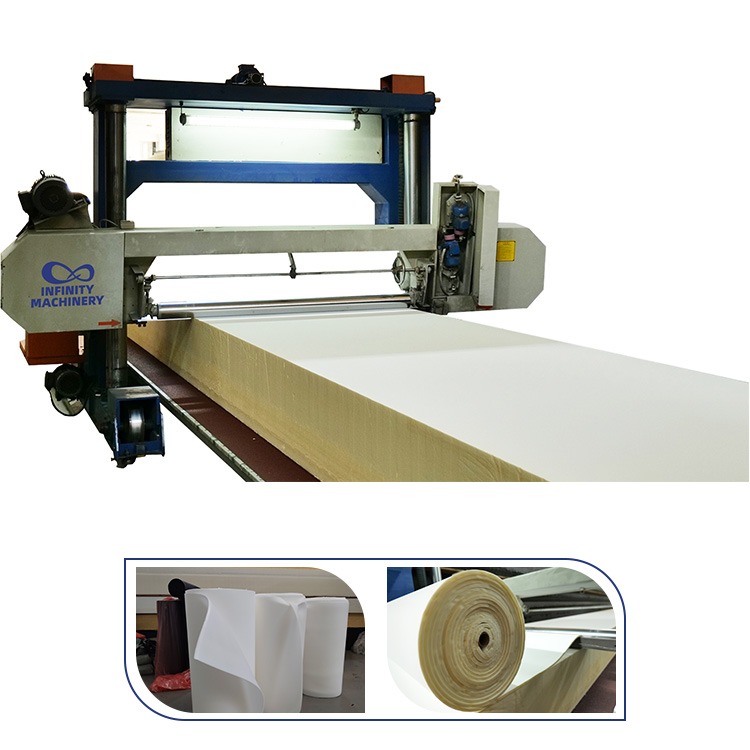
Thin foam sheets are everywhere in modern mattress construction. Comfort layers, pressure-relief zones, toppers, convoluted foam for airflow channels, packaging wraps, and a dozen other applications all depend on the ability to produce consistently thin, uniform foam sheets from bulky raw blocks and round buns. Yet most mattress factories still rely on manual splitting or outdated hot-wire cutting for these critical components - and it shows in their reject rates and material waste. In this deep dive, we examine two machines that solve the thin-sheet challenge from complementary angles: the IF-FYQ1 Foam Peeling Machine for continuous sheet production from round foam buns, and the IF-FPQ1-1650/2150 Horizontal Foam Cutting Machine for precision slab-to-sheet slicing. Combined, they form the most versatile thin-foam processing capability available to mid-size mattress manufacturers today.
Thin foam sheets, defined here as any foam layer under 10mm thick, present unique manufacturing challenges that thicker slabs simply do not. The margin for error shrinks dramatically: a 1mm thickness variation in a 100mm support layer represents 1% deviation, but the same 1mm error in a 5mm comfort layer represents 20% deviation. That inconsistency translates directly into a mattress that feels uneven, develops soft spots, or fails pressure distribution tests.
Most factories producing thin foam sheets use one of two methods: manual splitting with a horizontal band saw, or hot wire cutting. Both have fundamental limitations:
Our client, a mattress OEM producing for three European hotel chains, needed a step change in thin-sheet quality. Their specification called for foam comfort layers of 3mm, 5mm, 8mm, and 10mm thickness, with a tolerance of +/-0.3mm for the 3mm and 5mm sheets. At the time, they were rejecting 42% of their hot-wire-cut 3mm sheets. They needed a better way.
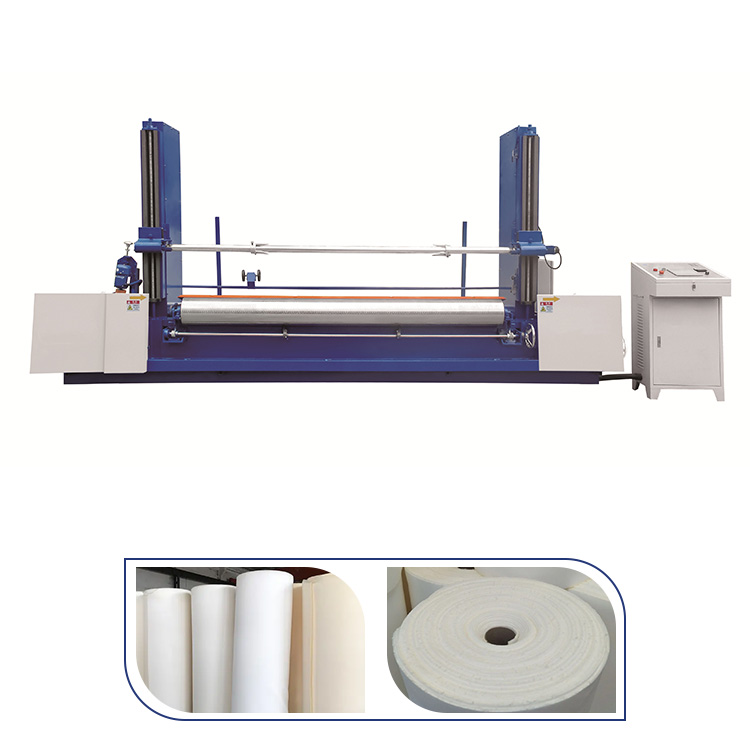
The IF-FYQ1 Foam Peeling Machine solves the thin-sheet problem through a fundamentally different approach: instead of cutting a slab into sheets, it peels a continuous layer from a rotating round foam bun, much like peeling an apple but with industrial precision. This is the same technology used for producing foam laminates, packaging sheets, and acoustic panels, but adapted for mattress-grade foam with thickness tolerances that meet bedding industry standards.
The machine accepts round foam buns up to 1200mm in diameter. The bun rotates on a motorized spindle while a precision-ground blade peels a continuous sheet from the outer surface. The operator sets the desired thickness on the digital control panel, and the machine maintains that thickness across the entire length of the sheet. The peeled sheet is automatically rolled onto a take-up spool, producing a continuous roll of foam that can be hundreds of meters long.
Why peeling beats cutting for thin sheets:
For our client, the IF-FYQ1 was transformative. Their 3mm comfort layer sheets, which had a 42% reject rate with hot wire, dropped to 4.5% with peeling. The continuous sheet output meant they could produce 400 meters of 5mm foam in a single 8-hour shift - enough for 280 queen mattress toppers. The material utilization improvement alone, from 58% to 89%, saved them $5,400 per month in foam costs.
The peeling process also produces foam with superior physical properties. Because the blade cuts along the natural cell structure of the foam rather than across it, the peeled sheets have more consistent compression characteristics. In independent lab testing, peeled 5mm sheets showed 23% less variation in IFD (Indentation Force Deflection) compared to hot-wire-cut sheets of the same material and thickness.
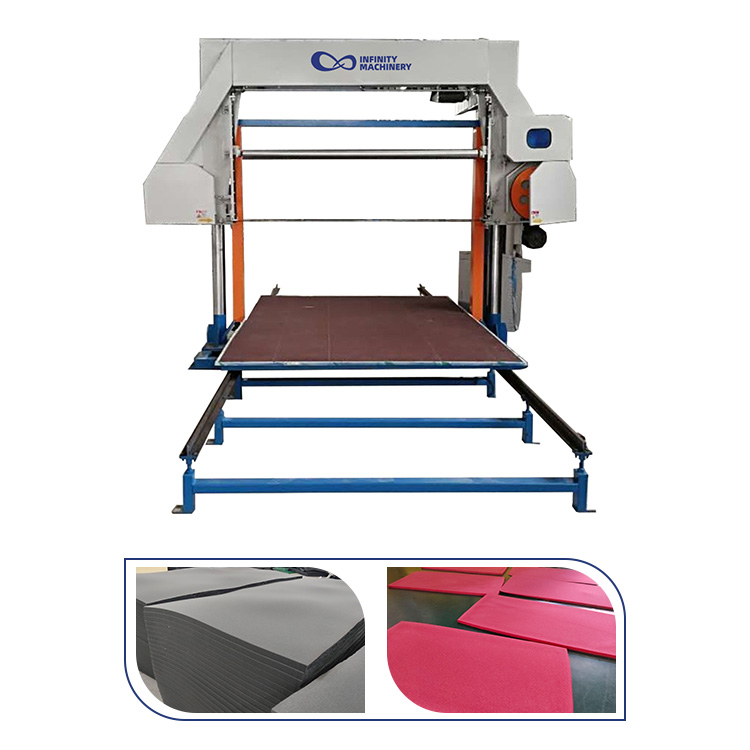
While the IF-FYQ1 handles continuous peeling from round buns, the IF-FPQ1-1650/2150 Horizontal Foam Cutting Machine takes the complementary approach: precision slicing of rectangular blocks into thin, flat sheets. Where peeling excels at producing long, continuous rolls of thin foam, the FPQ1 excels at producing individual sheets of precise thickness from block foam, with the flexibility to handle multiple densities and sizes in a single production shift.
The key advantage of the IF-FPQ1 for thin-sheet work is its fully automatic digital control system. The operator programs the target thickness, foam density, and feed speed, and the machine automatically adjusts the blade height and table feed rate to maintain +/-0.5mm tolerance across the full width of the cut. This level of precision is essential for multi-layer mattress constructions where each foam layer must be exactly the specified thickness for the mattress to perform as designed.
Our client uses the IF-FPQ1 for their 8mm and 10mm transition layers, which need to be thicker than what the peeling machine produces most efficiently but still demand the +/-0.3mm tolerance that manual cutting could not deliver. The FPQ1 processes a complete foam block (2m x 2m x 1m) into 10mm sheets in under 15 minutes - producing 100 sheets per block with only 6mm of kerf loss from the blade, compared to 25mm of kerf loss per sheet with hot wire cutting.
Combined throughput: Between the IF-FYQ1 (continuous peeling for thin layers) and the IF-FPQ1 (precision block slicing for medium layers), the factory now produces all their foam comfort and transition layers in-house with a total of 3 operators, down from 12 when the work was split between manual cutting and outsourced hot-wire services.
Total investment for the IF-FYQ1 and IF-FPQ1-2150, including installation and operator training: $52,800.
At $20,000 per month in savings, the two machines paid for themselves in 2.6 months. After that, the department became a profit center. The client now offers custom thin-foam sheet processing services to local furniture manufacturers, adding an additional $4,200/month in revenue.
Q: Can the IF-FYQ1 peel any foam density?
A: Yes, the FYQ1 handles standard mattress foam densities from 8 kg/m3 to 80 kg/m3. For very soft foams (under 12 kg/m3), we recommend the servo feed option which provides more precise tension control to prevent tearing during peeling.
Q: What is the maximum sheet width from the IF-FYQ1?
A: The sheet width is determined by the height of the round foam bun. Standard buns produce sheets up to 1200mm wide. For wider sheets, the IF-FPQ1-2150 handles up to 2100mm width from rectangular blocks.
Q: How do I choose between peeling and horizontal slicing?
A: Use the IF-FYQ1 for continuous thin sheets (0.5-8mm) in high volume, especially for toppers, wraps, and repetitive comfort layers. Use the IF-FPQ1 for thicker sheets (8-25mm) with precise thickness control, variable sizes, and mixed-density production runs. Most factories benefit from having both capabilities.
"Our hotel chain clients require thin foam comfort layers with tolerances that manual cutting simply could not deliver. The IF-FYQ1 peeling machine changed everything. Our 3mm sheet reject rate went from 42% to 4.5%, and our clients noticed the difference immediately. The peeling process also eliminated the hot-wire crust issue, which had been causing complaints about mattress breathability. The ROI was under 3 months."
- Operations Director, mattress OEM, Europe
Whether you need continuous peeled sheets for mattress toppers or precision-sliced layers for multi-zone comfort systems, the IF-FYQ1 and IF-FPQ1 combination covers the full spectrum of thin-sheet foam processing. We offer free process audits and ROI projections tailored to your production mix.
Products mentioned:
Get a free process audit and ROI projection for your foam peeling and slicing needs.