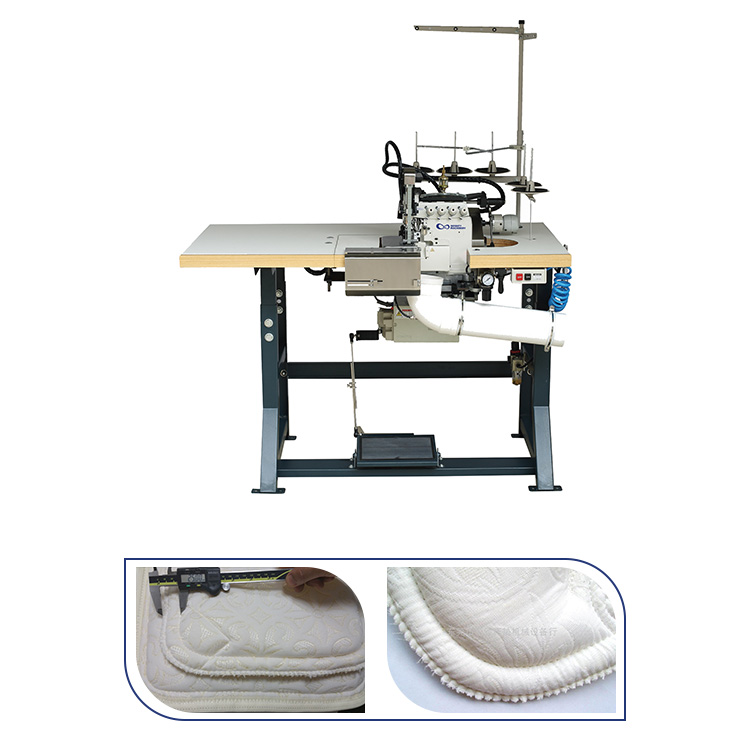
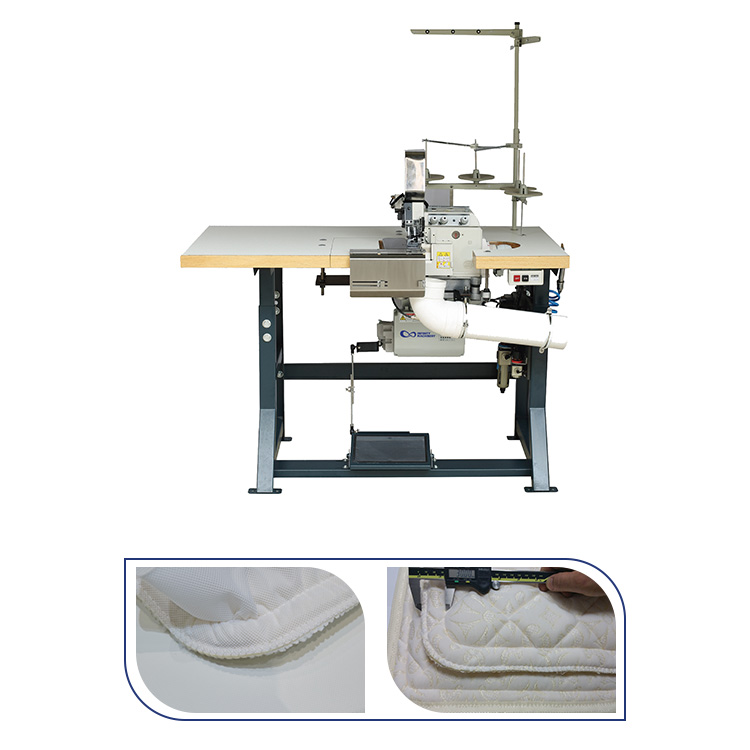
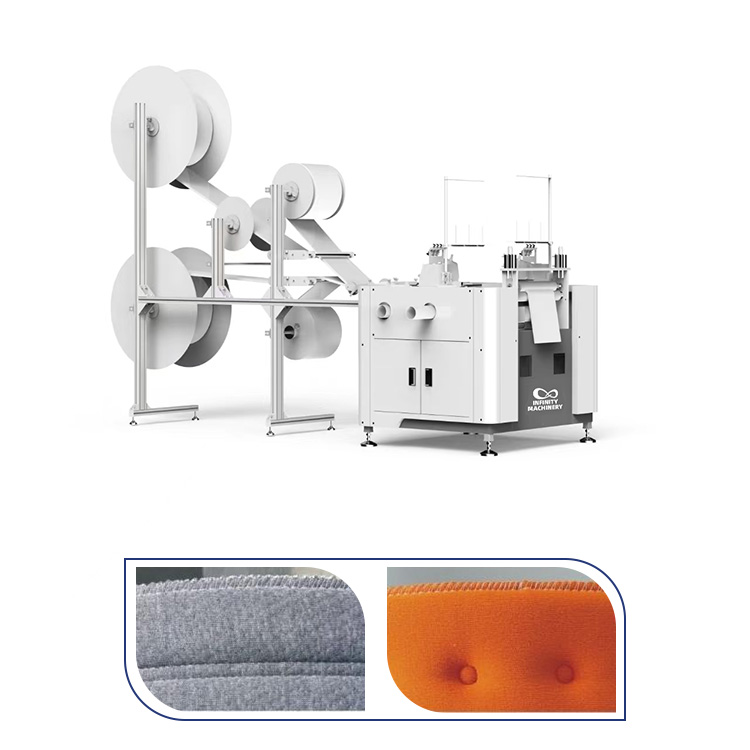
If you are shopping for a mattress flanging machine, you have probably come across two models: the IF-SBJ70 and the IF-SBP80. Both are professional-grade flanging machines from Infinity Mattress Machinery, but they serve slightly different production profiles and budgets.
In this FAQ guide, we answer the ten most common questions we receive from mattress manufacturers evaluating these machines. Whether you are outfitting a new production line or upgrading from manual finishing, these answers will help you make the right decision.
We cover everything: machine differences, fabric compatibility, operator requirements, speed comparisons, integration with existing lines, maintenance, training time, and real ROI numbers from factories that use these machines daily.
A mattress flanging machine sews the border fabric (the side panel) to the top and bottom panels of a mattress. This is the step that creates the finished edge of the mattress — the clean, professional border that gives the mattress its final shape and structure.
Flanging is different from tape edge sewing. Tape edge machines apply a decorative tape strip around the mattress perimeter and sew through all layers. Flanging machines, by contrast, sew the border fabric directly to the top and bottom panels without an additional tape strip. The result is a cleaner, more streamlined edge appearance that many mattress brands prefer for modern, minimalist designs.
Key distinction: Flanging = border fabric sewn directly to panels (no tape). Tape edge = decorative tape wraps the perimeter and is sewn through all layers. Both have their place, but flanging is increasingly preferred for higher-end and visually minimalist mattress lines.
These are the two main flanging machine models from Infinity Mattress Machinery. Here is a side-by-side comparison to help you decide:
| Feature | IF-SBJ70 | IF-SBP80 |
|---|---|---|
| Sewing Head | JUKI head, double-bolts straight needle | Heavy-duty industrial head with synchronous feeding |
| Best For | Standard mattress flanging, mixed fabric types | Thick/heavy fabrics, high-volume production |
| Feeding System | Standard feeding | Synchronous feeding — excellent for thick fabrics |
| Motor | Taiwan servo motor | High-torque servo motor |
| Fabric Handling | Thin and medium fabrics | Thin to extra-thick fabrics |
| Typical Output | 350-500 units/shift | 400-600 units/shift |
Bottom line: Choose the IF-SBJ70 if you produce standard mattresses with conventional fabrics. Choose the IF-SBP80 if you work with heavy fabrics, extra-thick borders, or need maximum production throughput.
Both machines can handle a wide range of mattress fabrics, but the IF-SBP80 has a clear advantage with challenging materials:
The IF-SBP80's synchronous feeding mechanism is the key differentiator. It ensures both the top and bottom layers feed at exactly the same rate, preventing puckering, stretching, or misalignment — even with thick, slippery, or multi-layer fabrics that tend to shift under a standard feeding system.
Both the IF-SBJ70 and IF-SBP80 are designed as single-operator machines. One trained operator can handle the full flanging cycle: load the mattress, guide it through the sewing head, and unload the finished product.
In high-volume factories running two or more flanging machines, some managers assign one operator per machine and one helper to handle loading/unloading for a pair of machines. This 2-person + 2-machine arrangement can produce 800-1,200 finished mattresses per shift.
By comparison, manual flanging (sewing border fabrics by hand or using a basic industrial sewing machine without a dedicated flanging frame) typically requires 2-3 people per workstation and produces only 80-120 mattresses per shift — with higher defect rates.
Productivity comparison: One IF-SBJ70 or IF-SBP80 with one operator replaces 2-3 manual workers and produces 4-5× more finished mattresses per shift.
Production speed depends on mattress size, fabric type, and operator experience. Here are real-world figures from factories running these machines:
| Mattress Size | IF-SBJ70 (units/shift) | IF-SBP80 (units/shift) |
|---|---|---|
| Twin / Single (90×190 cm) | 480-550 | 520-600 |
| Full / Double (135×190 cm) | 400-480 | 450-530 |
| Queen (150×200 cm) | 360-430 | 400-490 |
| King (180×200 cm) | 320-400 | 360-450 |
These figures assume standard knitted fabric and an experienced operator. New operators reach 80% of these speeds within one week and full speed within three weeks.
This is one of the most common questions we receive. The short answer: it depends on your target market and design preference.
Many factories run both. In our experience, approximately 60% of mattress manufacturers use both flanging and tape edge machines — they flang mattresses for their modern product lines and tape edge for their traditional or budget lines. The machines are not mutually exclusive. If you have the production volume, having both capabilities lets you serve a wider range of customers.
If you are starting with one, we recommend the IF-SBP80 for flanging (it handles a wider range of fabrics) and the IF-T4 for tape edge — these two machines cover virtually every mattress finishing scenario.
Both the IF-SBJ70 and IF-SBP80 are designed for low-maintenance operation in production environments. Here is the recommended maintenance schedule:
| Interval | Task |
|---|---|
| Daily | Clean needle area, remove lint and thread debris, check thread tension |
| Weekly | Lubricate sewing head (auto oiler on both models), check belt tension, inspect feed dogs |
| Monthly | Check needle timing, inspect all electrical connections, clean servo motor cooling vents |
| Quarterly | Full inspection of bearings and moving parts, check worktable alignment, test stitch consistency |
| Annual | Professional service: replace worn bearings, check motor brushes, full recalibration |
Both machines come with a remote diagnostic system that allows our technicians to monitor machine performance and identify potential issues before they cause downtime. Many of our customers report less than 2% downtime on these machines over the first two years of operation.
Yes. Both the IF-SBJ70 and IF-SBP80 are designed as drop-in additions to existing mattress production lines. Their compact footprint and standard power requirements mean minimal reconfiguration:
For factories planning a full production line upgrade, we recommend pairing the flanging machine with the IF-SB-A2 Mattress Sewing Machine for front and back panel sewing and the IF-T4 Tape Edge Machine for finishing — three machines that cover the entire mattress finishing department.
Operator training time is surprisingly short compared to other mattress production equipment. Here is what typical training looks like:
The machines are designed for ease of use. The IF-SBP80's synchronous feeding system is particularly helpful for new operators because it eliminates the most common beginner mistake — uneven fabric feeding that causes puckered seams. Both machines include a digital control panel with preset programs that simplify operation.
ROI is one of the most important factors, and the numbers are compelling. Here is a sample calculation based on a typical mid-size mattress factory:
| Cost Factor | Manual Flanging (3 workers) | IF-SBJ70 (1 operator) |
|---|---|---|
| Annual labor cost | $43,200 | $14,400 |
| Output per shift | 100 units | 400 units |
| Defect rate | 5-8% | <1% |
| Annual rework cost | $8,640 | $1,728 |
| Total annual savings | $35,712 | |
With an IF-SBJ70 priced at approximately $8,000-12,000 (depending on configuration and accessories), the payback period is 3-4 months. The IF-SBP80, priced slightly higher at $10,000-15,000, pays back in 4-6 months — still an exceptional return for production equipment.
After payback, every year of operation generates $35,000+ in net savings compared to manual flanging — plus the revenue benefit of higher production capacity. For a factory running two shifts, the annual savings double to over $70,000.
To build a fully equipped mattress finishing line, here are the three machines we recommend — starting with flanging and expanding from there.
Deciding between the IF-SBJ70 and IF-SBP80 comes down to three questions:
Whichever machine you choose, both the IF-SBJ70 and IF-SBP80 are proven, reliable flanging machines backed by Infinity Mattress Machinery's support network, remote diagnostics, and spare parts availability.
Our mattress finishing specialists can help you choose between the IF-SBJ70 and IF-SBP80 based on your specific fabric types, production volume, and budget. Get a personalized recommendation.