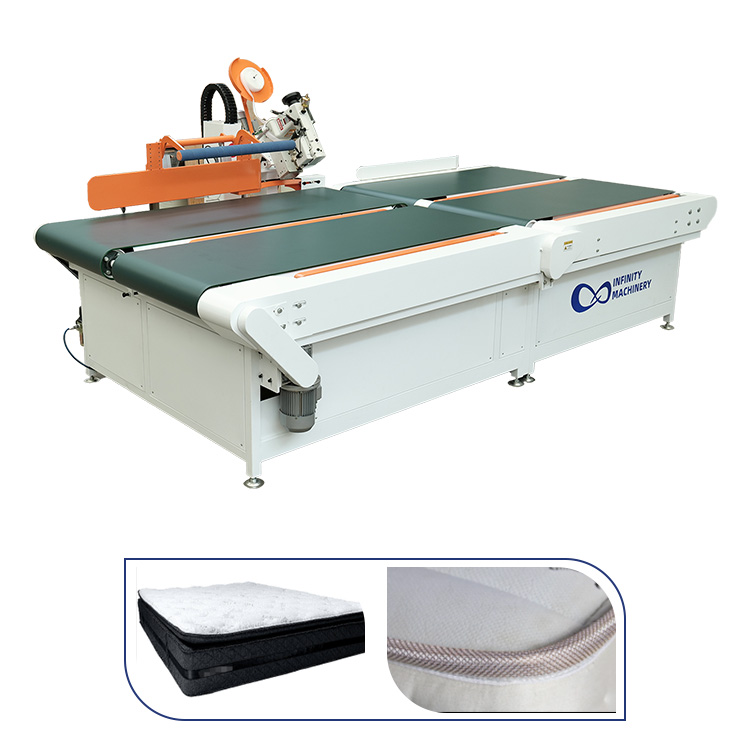
For the first two years of running my mattress factory, I kept buying cheap flanging machines. I thought a flanging machine was just a flanging machine—as long as it could fold and sew fabric around a border panel, it would do the job. I was wrong. I went through three machines in two years, each one breaking down exactly when we needed it most.
When I finally decided to invest in proper flanging equipment from Infinity Mattress Machinery, I discovered that the IF-SBJ70 Mattress Flanging Machine and the IF-SBP80 Mattress Flanging Machine serve completely different purposes—and I needed both.
My first flanging machine was a second-hand unit from a local dealer. It handled thin polyester fabrics reasonably well for the first three months. Then the sewing head started skipping stitches, the feeding mechanism jammed on medium-weight fabrics, and finding spare parts was a nightmare. The machine would be down for a week while we waited for parts from overseas.
The second machine was slightly better—a newer model with a standard sewing head. But it had a fundamental problem: it could not handle thick fabrics. Our product line includes mattress models with heavy upholstery-grade fabric, and this machine would choke on anything thicker than 3mm. The operator had to manually push the fabric through, which caused inconsistent stitch quality and frequent needle breakage.
The third machine was supposed to be the answer. It had a more powerful motor and claimed to handle thick fabrics. But it was a one-size-fits-all design that did not do anything well. The flanging quality was acceptable on medium fabrics but poor on both thin and thick materials. The fold width was inconsistent, the stitch tension varied, and the machine consumed far more thread than necessary due to frequent re-adjustment.
Over two years, I spent approximately $8,000 on three machines plus another $3,200 in repairs and lost production time. Our flanging output was stuck at 80 panels per shift, and the defect rate hovered around 8%. Every rush order was a crisis because we could never trust the flanging department to deliver on time.
Before I called Infinity Mattress Machinery, I took a hard look at our product mix. Our factory produces approximately 400 mattress panels per day across four main product lines:
This is when I realized that no single flanging machine could optimally handle all three fabric categories. The thin fabrics needed speed and precision. The thick fabrics needed power and robust feeding. Trying to do both on one machine meant compromising on both.
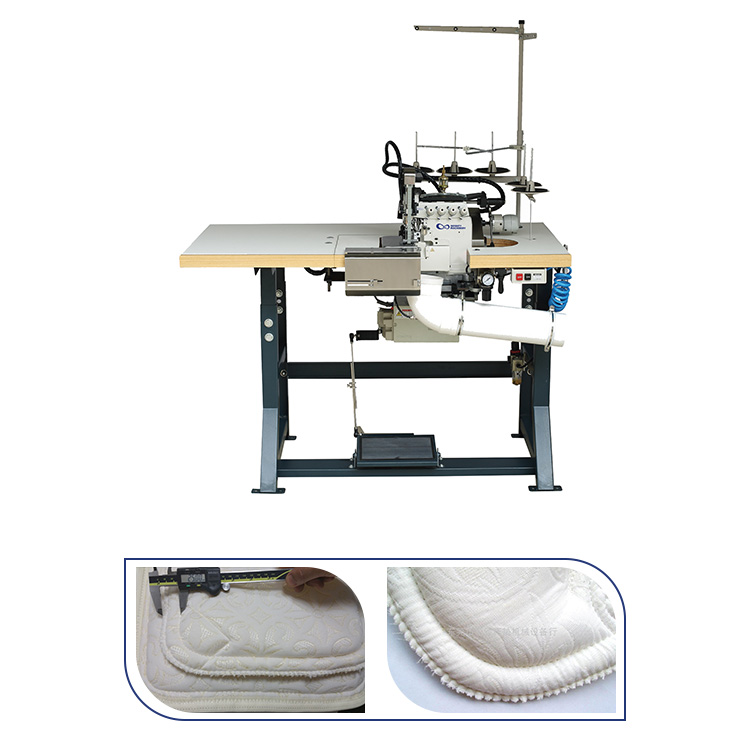
The IF-SBJ70 is the machine I bought first. It features a genuine JUKI sewing head with double-bolts straight needle design. This is not a generic sewing head with a JUKI-style housing—it is an actual JUKI head, which means the stitch quality, the needle penetration, and the thread tension control are on par with what professional garment factories use.
What surprised me about the IF-SBJ70 was how well it handled our premium line fabrics. The thick damask borders that used to cause constant problems on our old machines now ran through smoothly at consistent speed. The JUKI head maintained perfect stitch formation even at the seams where the border fabric was folded double.
The Taiwan servo motor deserves special mention. On our old machines, the clutch motor would continue spinning for several seconds after stopping, making thread trimming awkward and wasting thread. The servo motor stops instantly. Our thread consumption dropped by about 15% just from this change.
But the IF-SBJ70 had one limitation: on very thin fabrics (under 2mm), the feeding mechanism was slightly too aggressive. The fabric would sometimes gather or pucker at the fold point. The flanging was still acceptable—our defect rate on thin fabrics dropped to about 3% compared to 10% before—but I knew there was room for improvement.
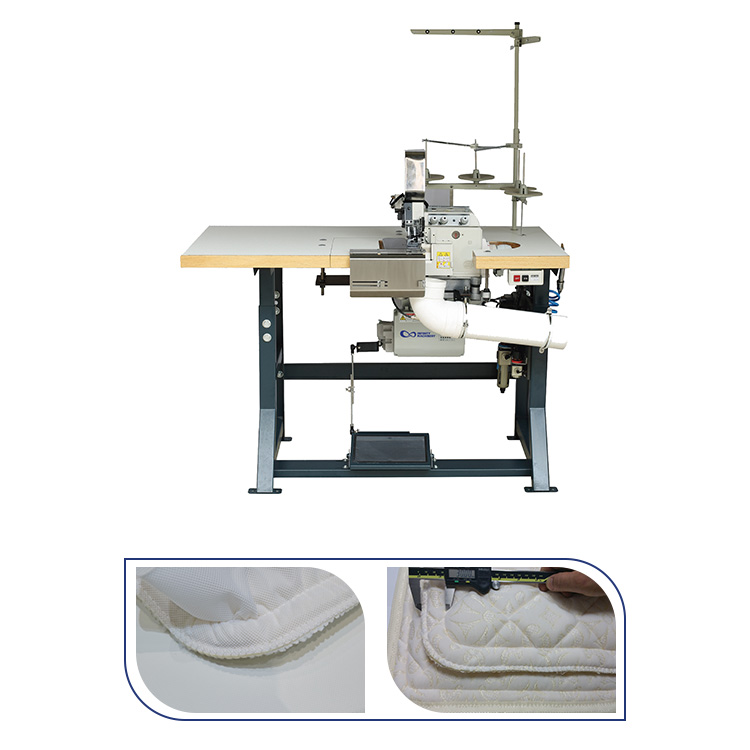
Three months after installing the IF-SBJ70, I added the IF-SBP80 Mattress Flanging Machine to handle the thin and medium fabric work. The key difference is the synchronous feeding structure, which provides exceptional feeding performance on thin and medium fabrics.
The synchronous feeding makes a dramatic difference on thin fabrics. The gathering and puckering issues we experienced on the IF-SBJ70 disappeared completely when running thin materials on the IF-SBP80. The fabric feeds through flat and even, and the fold width is perfectly consistent from start to finish.
I also tested the IF-SBP80 on our premium heavy fabrics just to see how it would perform. While the IF-SBJ70 still has an edge on very thick materials (over 6mm), the IF-SBP80 handled the 4-5mm range without any issues. This gives us flexibility: if one machine is down for maintenance, the other can cover most of its work.
The defect rate on thin fabrics dropped from 10% on our old machines to less than 1% on the IF-SBP80. For medium fabrics, the defect rate is approximately 0.5%. These numbers are important because every defective panel means re-cutting fabric, re-flanging, and delaying the production schedule.
The two machines complement each other perfectly. The IF-SBJ70 is our premium line specialist, and the IF-SBP80 handles everything else with exceptional quality. Together they cover 100% of our flanging needs with defect rates under 3% across all fabric types.
Before the upgrade, we had two operators per shift running one unreliable machine, producing 80 panels per shift with an 8% defect rate. Today, we have two operators managing both machines and producing 180 panels per shift across two lines. The defect rate across all fabric types has dropped to under 2%.
The operators prefer this setup because they can specialize. One operator focuses on the premium heavy fabrics on the IF-SBJ70, while the other handles the budget and mid-range lines on the IF-SBP80. Cross-training took approximately two days per operator, and now they can cover each other's machines when needed.
The financial impact was immediate. Our monthly labor cost for the flanging department stayed roughly the same (two operators per shift), but output more than doubled. The per-panel flanging cost dropped from approximately $0.48 to $0.21. At our production volume of roughly 10,000 panels per month, that is a monthly saving of $2,700. Combined with the reduced defect rate saving approximately $800 per month in rework materials, the two machines paid for themselves in four months.
Eight months into operation, both machines have run for over 2,400 production hours combined. The IF-SBJ70 has required needle replacement every three weeks (standard wear, approximately $12 per change) and one thread tension adjustment after a fabric change. The IF-SBP80 has needed new feed dogs installed once at month five ($28) and regular cleaning of the synchronous mechanism.
Zero breakdowns. Zero emergency service calls. Total maintenance cost in eight months: approximately $130 for both machines. Compare this to the $3,200 I spent on repairs and downtime with my previous machines over two years.
Daily maintenance is simple: the operators spend 10 minutes at the end of each shift cleaning lint and dust from the feed mechanism and applying a drop of oil to the specified lubrication points. Weekly maintenance takes about 20 minutes and involves checking the feed dogs, needle condition, and thread tension mechanism.
The Taiwan servo motors deserve another mention here. After eight months of two-shift operation, both motors run as smoothly as day one. The instant start-stop feature has eliminated the thread waste we used to experience, and the consistent speed control means the stitch quality does not vary between the first and last panel of the day.
Based on my experience, here is my honest advice for anyone in a similar situation:
If you run a mix of fabric types (thin to heavy): Buy both machines. Start with the IF-SBP80 if budget is tight, because it handles a wider range of fabrics acceptably. Add the IF-SBJ70 when you can, because it will transform your premium product quality.
If you mainly run heavy upholstery and premium fabrics: The IF-SBJ70 is your machine. The JUKI double-bolts head and heavy-duty construction are specifically designed for this work. One IF-SBJ70 can replace two or three lighter-duty machines.
If you mainly run thin polyester and cotton blends: The IF-SBP80 with synchronous feeding will give you the best quality at the highest speed. The thin-fabric defect rate of under 1% is unmatched.
Regardless of which machine you choose, buying from Infinity Mattress Machinery means you get genuine JUKI or JUKI-style components, Taiwan servo motors, and a company that understands mattress manufacturing. The difference between their machines and the generic alternatives is visible in the stitch quality, the feeding consistency, and the long-term reliability.
If I had to choose only one machine, I would pick the IF-SBP80 because it handles the widest range of fabrics. The synchronous feeding system makes a real difference in day-to-day production, especially if your product mix includes thin fabrics.
But the ideal setup is both machines. The IF-SBJ70 for heavy-duty premium work and the IF-SBP80 for everything else. Together they cost less than what I spent on three inferior machines and two years of repairs. And they have been running for eight months with zero breakdowns and total maintenance costs under $150.
Infinity Mattress Machinery has been manufacturing flanging equipment for over a decade. Their machines carry CE and ISO 9001 certification. Contact them for a consultation on which flanging machine suits your product mix, and ask for a customized ROI projection based on your current production volume.
Tell us about your current flanging setup. We'll calculate exact savings and recommend the right machine.